When You Leave: What Pets May Feel During Long Periods Alone
Updated: Jun 22
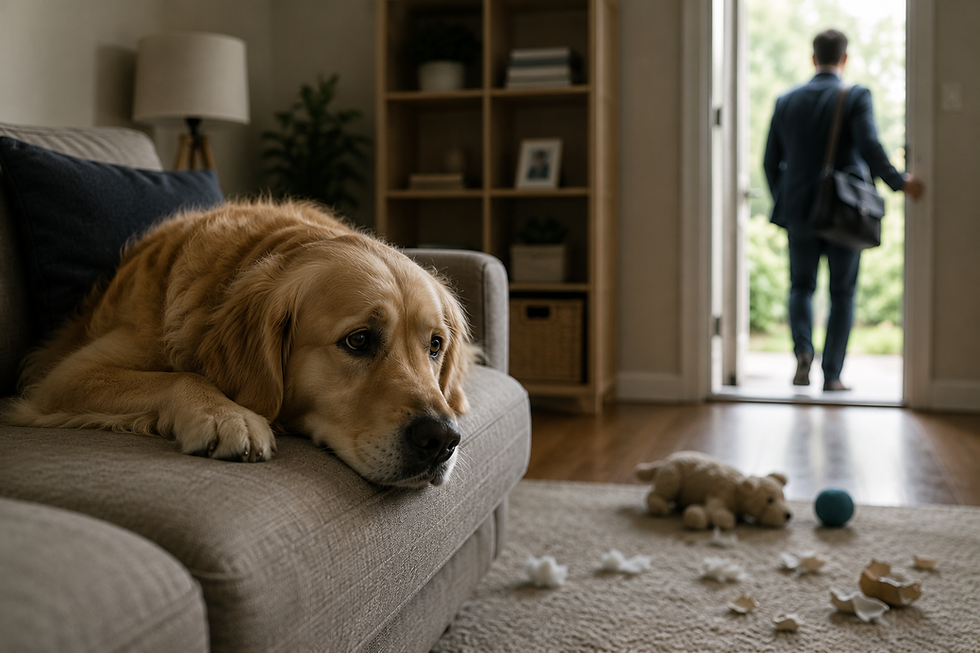
Most pets form strong routines around their people. When that routine suddenly changes—especially for hours at a time—many animals don’t interpret it as ‘work’ or ‘errands.’ They simply notice that their safe person is gone.
Below is a compassionate look at what pets may experience when left alone for long periods, plus a few practical ways to make those hours easier.
What pets might feel (and why)
Confusion: ‘You usually come back sooner—what changed?’
Loneliness: social animals often prefer company, even quiet company.
Anxiety: some pets worry when they can’t predict your return.
Boredom: without enrichment, time can feel very long.
Frustration: especially in high-energy dogs who need movement and interaction.
Hypervigilance: listening for sounds at the door or window, waiting for you.
Common signs your pet is struggling
Every pet is different, but these are some common clues that alone-time is too hard:
Excessive barking, howling, or meowing after you leave
Destructive chewing/scratching near doors or windows
House soiling despite being trained
Pacing, drooling, trembling, or panting
Over-grooming (cats) or licking paws until irritated
Not eating while you’re away—or overeating immediately when you return
How long is ‘too long’?
There isn’t one perfect number. Age, health, temperament, and training matter. Puppies, senior pets, and animals with medical needs typically need more frequent breaks and check-ins.
Ways to make alone-time kinder
Build a predictable routine: consistent departure and return cues can reduce uncertainty.
Add enrichment: food puzzles, snuffle mats, safe chew items, or treat scatters.
Create a calm space: a cozy bed, familiar scents, and gentle background sound.
Practice short absences: gradually increase time away to build confidence.
Consider help: a dog walker, pet sitter, or daycare for long days.
Talk to your vet: if anxiety is severe, behavior training and medical support can help.
A gentle reminder
If your pet seems ‘clingy’ when you get home, it may not be misbehavior—it can be relief. With the right support, many pets learn that alone-time is safe and temporary.
If you’re unsure what your pet is experiencing, we can help you assess stress signals and build a plan that fits your household.

Comments